
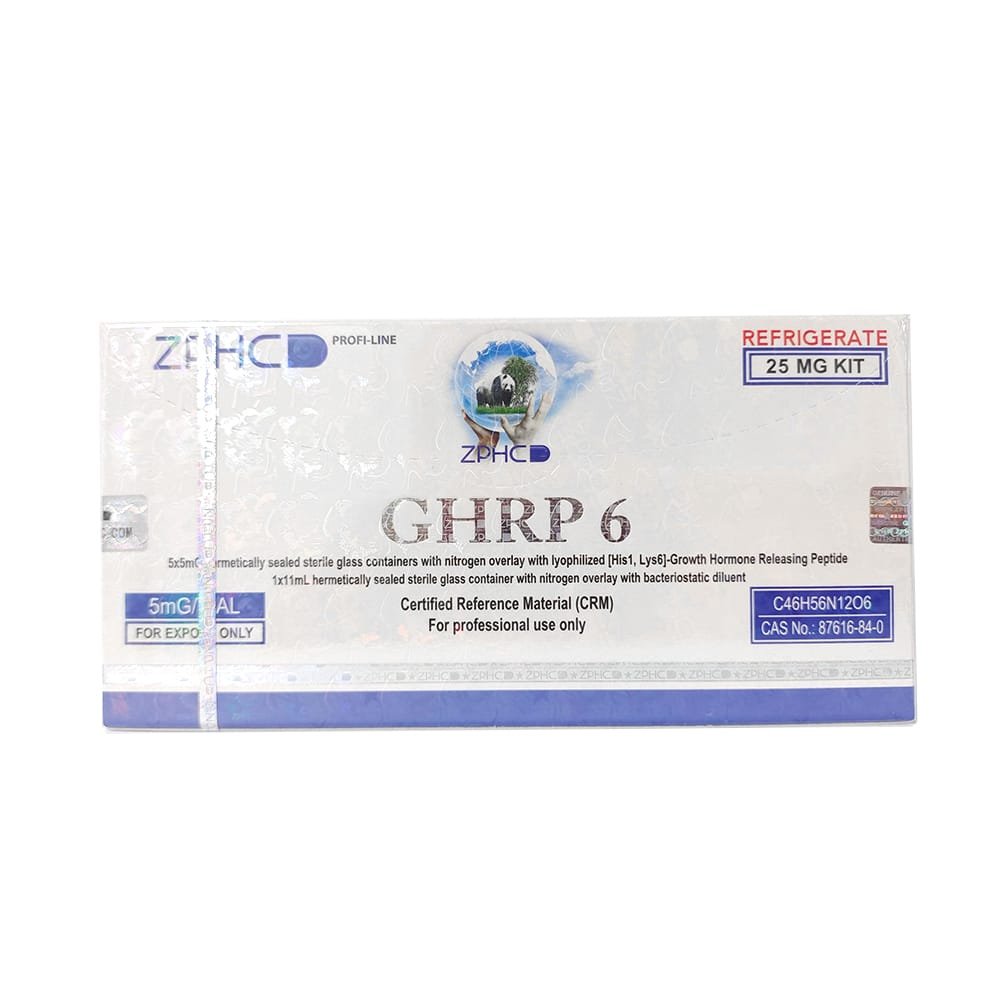
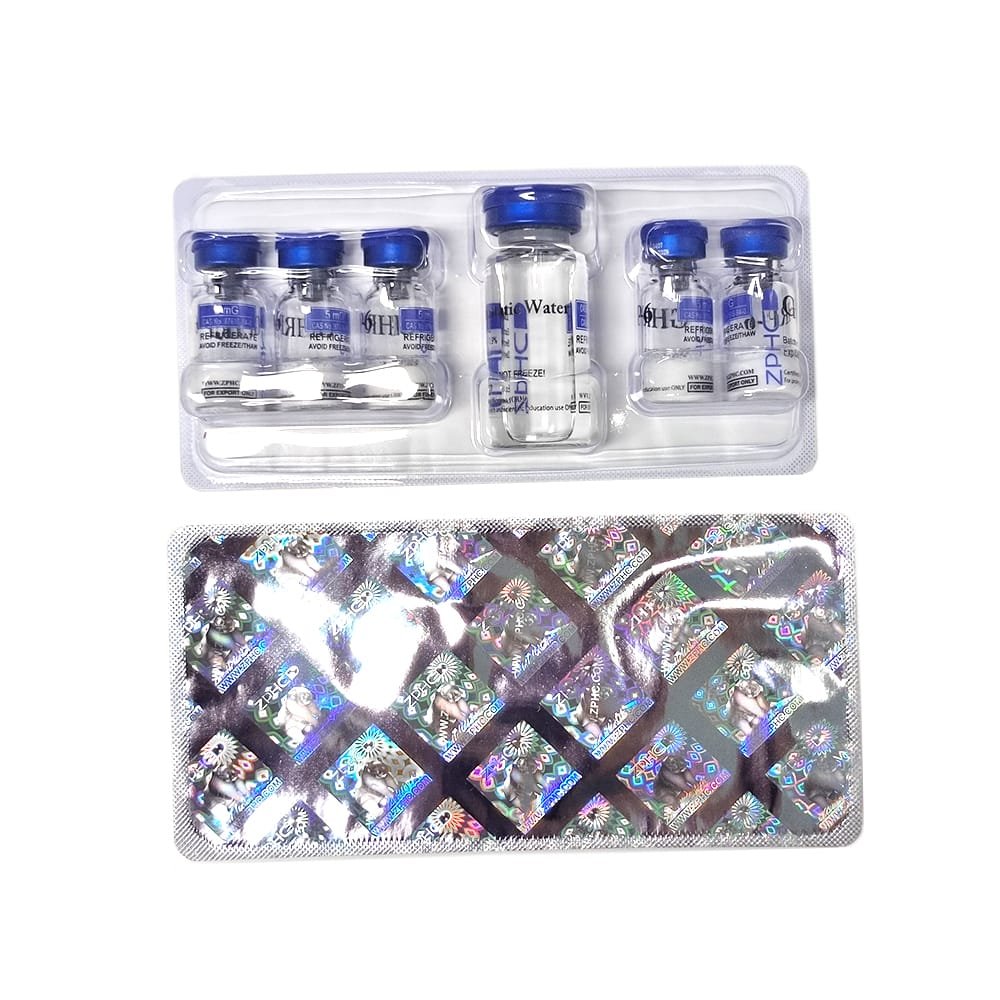
Buy GHRP-6
Buy GHRP-6 is a hexapeptide made of six amino acids and is classified amongst researchers as a growth hormone secretagogue (GHS), the classification of which is speculated to facilitate growth hormone (GH) release from the anterior pituitary gland cells. It may achieve this action by potentially acting as a ghrelin receptor agonist and is amongst the ghrelin analogs developed in recent decades. Researchers have suggested that the ghrelin receptor is found in anterior pituitary gland cells. Since their activation appears to result in the synthesis of growth hormone, the receptors are also termed “growth hormone secretagogue receptors” (GHS-Rs). Since ghrelin is posited to impact hunger hormone stimulation, GHRP-6 is also posited to exert similar actions and stimulate food intake. In addition, it has been suggested that it positively influences cardiac muscle cells even in fibrosis cases, and may deliver possible positive neurological impacts in experimental settings.
Specifications
Molecular Formula: C46H56N12O6
Molecular Weight: 873.032 g/mol
Sequence: His-D-Trp-Ala-Trp-D-Phe-Lys
GHRP-6 Peptide Research
GHRP-6 and the GHS receptors
Upon binding to the GHS receptors, GHRP-6 likely triggers a cascade of intracellular signaling processes deemed crucial for GH secretion.[1] One of the primary pathways activated by GHRP-6 may involve the stimulation of Gq protein subtypes. This stimulation is theorized to lead to the activation of phospholipase C (PLC). Upon activation, PLC facilitates the hydrolysis of phosphatidylinositol 4,5-bisphosphate (PIP2) into two-second messengers: inositol triphosphate (IP3) and diacylglycerol (DAG). The release of IP3 into the cytoplasm may be pivotal in increasing intracellular calcium levels. IP3 appears to achieve this by binding to its receptors located on the endoplasmic reticulum (ER), prompting the release of calcium ions (Ca2+) from these intracellular stores. The surge in cytosolic calcium is believed to be a critical signal that promotes the fusion of GH-containing vesicles with the plasma membrane, leading to the secretion of growth hormone via exocytosis. Simultaneously, DAG appears to activate protein kinase C (PKC), a key signaling molecule in numerous cellular processes, including the secretion of hormones. The activation of PKC further supports the process of vesicle fusion and GH release.
Researchers have observed a potential rise in growth hormone (GH) concentrations subsequent to exposure to GHRP-6. The data indicates that the average peak level of GH attained was approximately 15.7 nanograms per milliliter (ng/ml). Furthermore, the cumulative average quantity of GH secreted over the initial 90-minute period of the study was recorded at 674 ng/ml. [2] In a separate study, GHRP-6’s actions were evaluated in comparison to a control compound. This analysis tentatively suggests that the influence of GHRP-6 correlated with a release of 15.4 ng/ml of GH, in contrast to the control group, which exhibited a level of 5.5 ng/ml. These observations imply a potential link between GHRP-6 exposure and increased GH levels.[3]
GHRP-6 and the CD36 receptors
It is posited that GHRP-6, a growth hormone-releasing peptide, may potentially interact with receptor sites other than those specifically related to ghrelin, known as GHS-Rs. There is a possibility that these additional receptors might encompass CD36 receptors.[4] CD36 receptors, involved in an array of biological processes, are hypothesized to contribute to lipid metabolism. This function is thought to be mediated through their role as scavenger receptors, which help in the absorption and conveyance of lipids throughout the organism. Furthermore, CD36 receptors may exhibit some role in influencing immune responses. This might be particularly relevant in activities such as phagocytosis, where cells ingest harmful particles, and inflammation, a critical response of the immune system to infection and injury. Additionally, CD36 receptors have been associated with angiogenesis, a complex process involving the growth of new blood vessels from pre-existing ones, which is deemed crucial for tissue recovery and development.
Reviews
There are no reviews yet.